
Send us the old system. Get a map back.
Hundreds of migrations across legal, CRM and specification platforms, every one reconciled before go-live.
Watch
Why your data fails: data normalization explained by George Ayub
George Ayub on why data fails: the normalisation work that decides whether a migration reconciles.
More videos on this pageFour spans, and proof at the other side
What a migration actually is
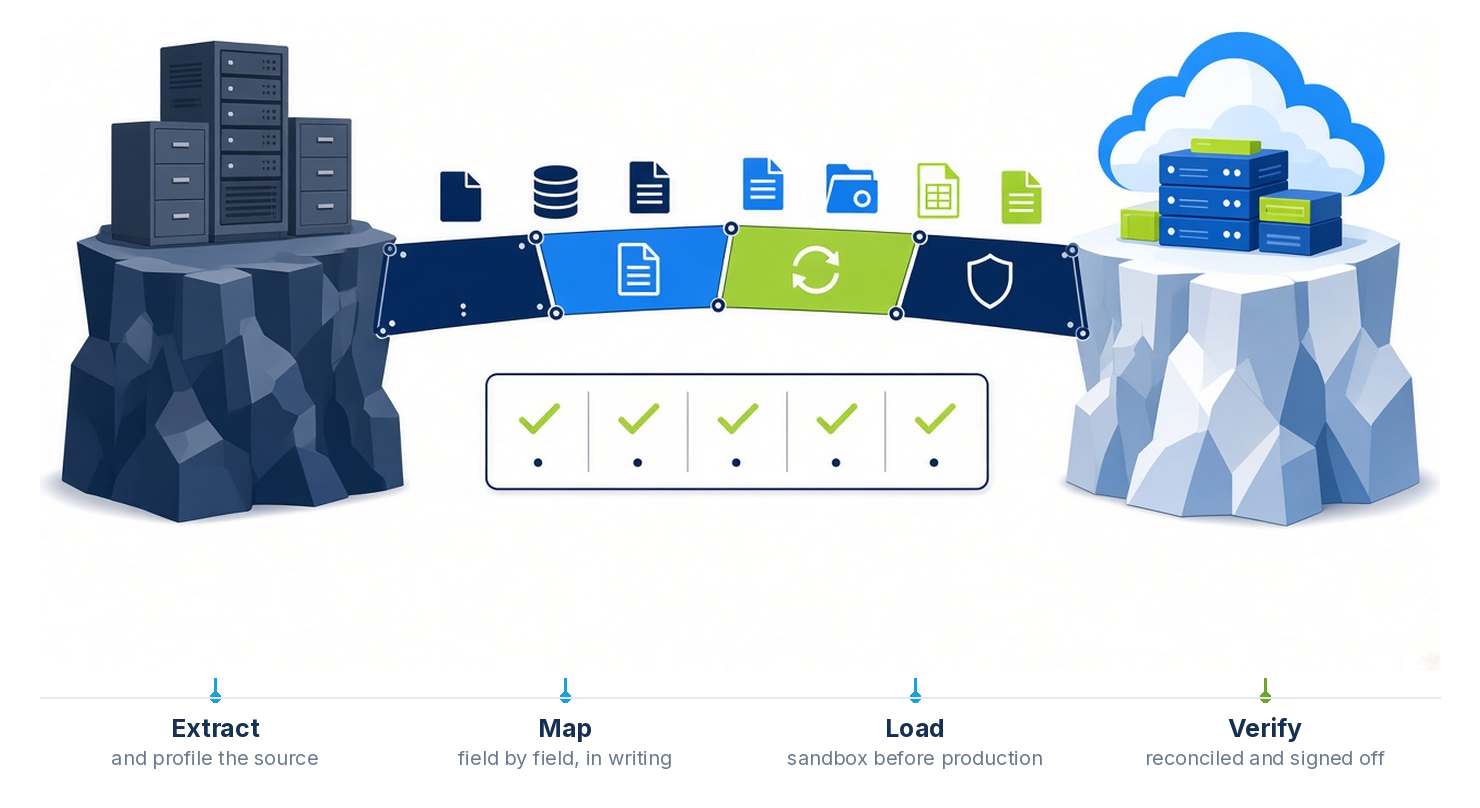
Two systems, one written map, and proof that everything arrived.
Eight things we move, and prove
Matters and cases
With their full history, not just the open ones.
Contacts and parties
Relationships and roles preserved, duplicates resolved.
Documents
The folder tree kept intact, so files are where staff expect.
Tasks and deadlines
Calendars and deadline chains, still linked to the matter.
Notes and activity
Activity logs and email threads, in context.
Custom fields
Picklists and phase data mapped into real fields, not a notes blob.
Financials
Costs, liens, fees and settlement records, line by line.
Users and permissions
Roles, teams and access rebuilt on the new platform.
The reconciliation report
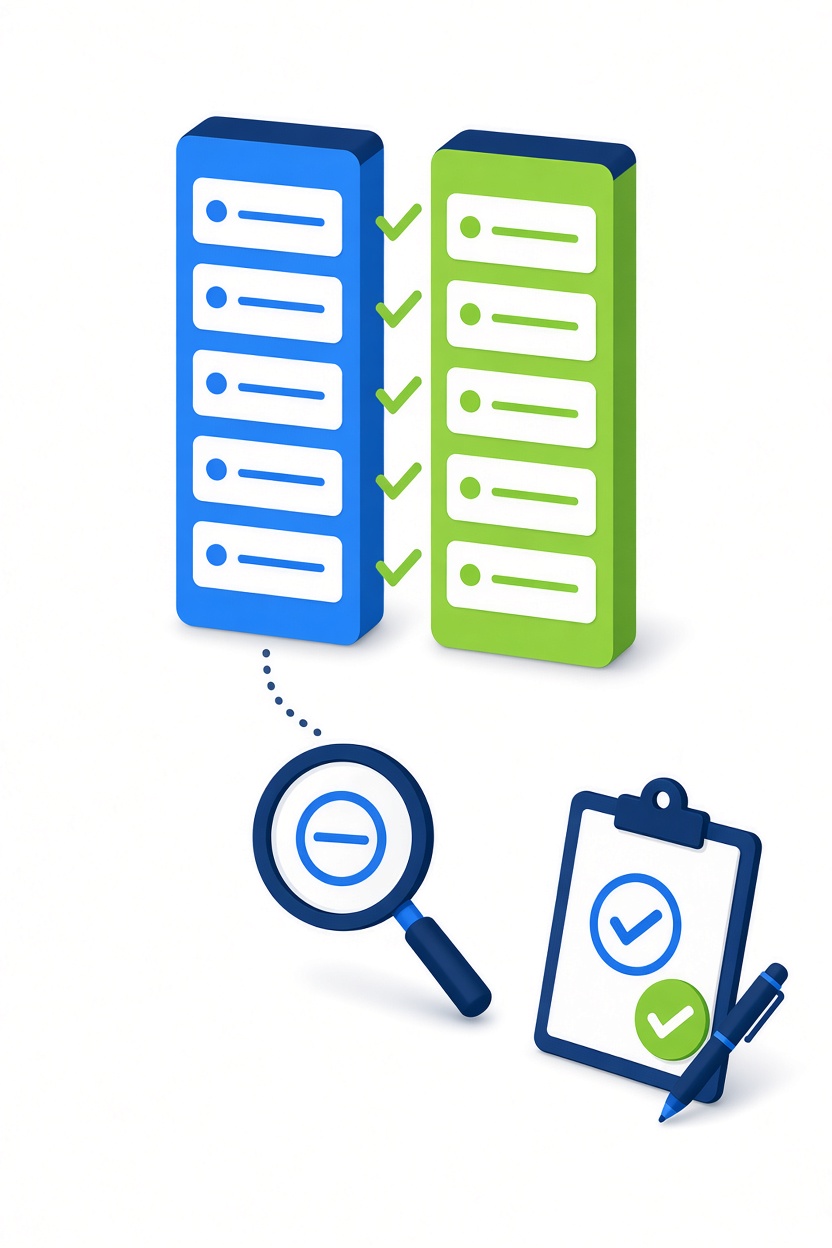
Source record counts against destination record counts, field by field, document by document.
- Signed off by your team before anyone goes live
- Every exception listed with a reason, not hidden
- Spot checks against the source system, on real records
- SOC 2 Type 2 controls on your data during the move
- The report doubles as your audit trail afterwards
Systems we have migrated
If yours is not listed, we have probably already read its database.
Legacy case management
Cloud case management
Documents and databases
Extract, map, load, prove
Nothing is frozen and nothing goes live on trust.
Extract and profile
We read the source, count everything and find what is dirty.
Map in writing
A field-by-field mapping your team approves before a single record moves.
Load to sandbox
You see your own data in the new system before production.
Cut over
Delta pass for anything new, reconciliation signed off, then go live.
Migration done properly
The difference shows up six months later, not on go-live day.
A cheap migration
- Records counted once, at the end, by the vendor
- Unmapped fields dumped into notes
- Documents flattened out of folders
- Files frozen while the move runs
- Nobody can say what did not come across
How we run it
- Counts agreed before, during and after
- Every field mapped, or explicitly listed as dropped
- Folder tree preserved, document by document
- Two-stage cutover with a delta pass
- A signed reconciliation report you keep
Migration guides by source platform
How the move runs from Needles, Clio, MyCase and ProLaw, or the full list of source systems.
After the migration: somebody accountable for the new platform
A migration lands the data; the retainer keeps the platform working afterwards, with a named admin and a flat monthly fee: managed services, Filevine managed services, Litify managed services.
Watch: why migrations break, and how to run one that does not
George Ayub on data normalisation and scalable data models, and the YoCierge webinar on case management transitions.


More on the Micronetbd YouTube channel.
An export or a schema is enough to start
Send us what you have. You get back a written field-by-field map of what moves, what needs cleanup, and what will not come across.