
How Telaré Law moved to a new law firm CRM in 3.5 months with no data loss
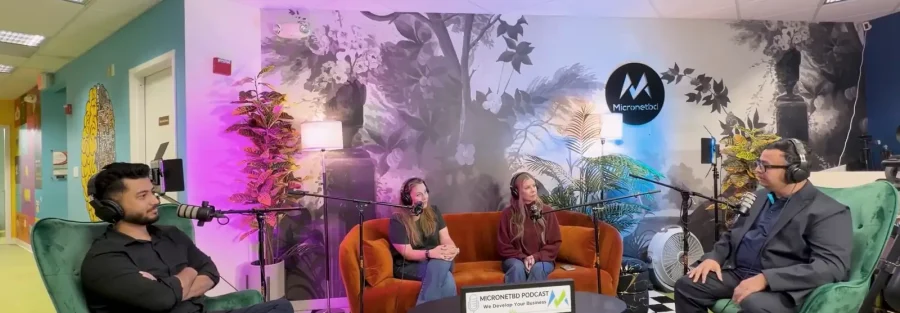
Everyone told Telaré Law that moving a growing personal injury firm to a new law firm CRM would take nine to twelve months. Andrea Telquist, co-founder and chief operating officer, and Tara Haverkamp, director of operations, did it with Micronetbd in three and a half months and, in their words, with no data loss. In this episode of the Micronetbd Podcast, recorded in our Hamilton, New Jersey studio with George Ayub and Safayet Zamil, they walk through the decision, how they chose a partner, the work the firm put in on its own side, and what they would tell a smaller firm that wants to grow. The episode is below, and the lessons are written out underneath it.

Key moments (each link opens the episode on YouTube at that point):
The decision: if we do not change now, we get stuck
Telaré Law is a personal injury trial firm based in Washington and Oregon, now expanding into Idaho and Montana. By the time its contract on the previous system came up for renewal, the firm had outgrown it in one specific way: intake ran on a different system from case management, so there was no end to end data. The intake funnel had gaps, marketing did not have the numbers it needed, and if marketing did not have them, neither did finance.
Andrea describes the decision as fast, because the alternative was clear. “If we don’t change now, we will get stuck.” She did not let the choice drag. “You can’t continue to belabor the decision. If we’re going to grow and scale like we want to, we need the best product out there that’s going to allow us to do that, and where we were, we were struggling.” Tara puts the reason for the move to Litify in one line: having end to end data across intake, the matter, marketing and finance made it, in her words, a no brainer switch.
Safayet adds the point most firms miss. The hard part is rarely the migration itself. It is being willing to decide, then working backwards from that decision through training, onboarding and the effort the firm’s own leadership has to put in.
Why it took three and a half months, not twelve
Three things on the firm’s side made the pace possible, and the guests are candid that not every firm starts with all of them.
A champion and an executive sponsor. Andrea is an attorney who no longer practises; she runs operations, and she made the Litify project her job for the duration. Tara brought the intake side. Between the two of them the whole process was in the room: intake, case management, what an attorney needs to see, what accounting needs at the end. Micronetbd did not have to chase three or four roles for answers, which Tara credits as one of the main reasons the transition moved so quickly.
Discovery done properly, and often. At the start the discovery sessions ran three or four times a week. The firm came to every one prepared, took the questions that needed internal work, such as how the matter plans should run, worked them through on their own time and came back with decisions. Safayet calls this the thing firms most often get wrong: hiring a vendor and expecting the vendor to carry the project to the finish line alone. A successful implementation is a two way effort.
Decisions made quickly and on data. The move also meant going back to the other vendors in the stack and making each of those calls on numbers and comparisons rather than instinct, and making them fast.
I still walk into rooms and go to conferences, and they're like, that didn't happen. You didn't go that fast. There's no way. Everybody has horror stories for how long it takes.Andrea Telquist, co-founder and chief operating officer, Telaré Law
Andrea is also honest about the advantage the firm had. An attorney who does not practise, backed by a founding partner who trusts her to run the change, is not a position most firm owners are in. The lesson for everyone else is to create that space deliberately: name the person whose job the migration is, and give them the time.
Choosing an implementation partner
Telaré looked at several partners. What decided it, in Andrea’s words, was that Micronetbd was the most put together: a sizeable team committed from the very first meeting, an organized plan, and the structure to deliver on the timeline the firm needed. Tara’s test was the first call. Engineers were on it, every question got a clear answer, and there was no shakiness. “You were very clear and very confident, and it’s because you’re very competent.” They got off the call and knew.
Not only did you show up in a good way, but you delivered.Tara Haverkamp, director of operations, Telaré Law
Business architecture first: the pen and paper test
George’s framing for any project is to forget the software for a moment. If there were no electricity, how would the intake department be organized? How does each process run? The business of a personal injury firm has not changed in fifty years; the tools have. Know the business and how each department operates, then adapt the tools to it.
Telaré had done that work in stages. Andrea and her husband George Telquist, the founding attorney, came from a general practice firm where going digital was an idea that stayed an idea for years because the lift looked too big. When they started their own firm, getting off paper was non negotiable. The first chapter was part paper, part shared files. The first real CRM was a revelation because it kept the expenses: nobody had to walk down the hall to accounting to ask how much the firm was into a case. The next system brought search, tasks and automation. Each chapter taught the firm what the next one had to do, which is why, by the time of this migration, Andrea could describe the end state in detail from intake through accounting. As George puts it, the firm brought the business architecture, Micronetbd brought the technical architecture and the legal knowledge, and the project worked when those married up.
Getting a team to adopt new technology
Asked where growing firms stall, Tara’s answer is knowledge management: SOPs, structured systems, a way to make what the organization knows move with it. Her rule is to solve a problem ten times rather than once, and to roll change out iteratively: start with a minimum version, get feedback quickly, improve, then put legs on it so the next three people hired can start running. Telaré describes itself as agile minded. If something does not work, the firm says so, pivots and moves on. “We didn’t fail, we learned something.”
Andrea credits the firm’s growth to the pairing at the top: George Telquist as the visionary, fast paced and outgoing, and herself as the integrator who turns direction into operations, with Tara complementing her. Each stays in their lane, makes the decisions that are theirs to make, and lets the others work.
She is also open about the hardest part. A long tenured team member who had already been through paper files and two CRMs chose to retire rather than take on another change, after twenty seven years. Separating from the people who wanted to keep working the old way was, she says, the most difficult decision of the whole period, and also the point at which the firm could move to the next level. Today the people on the team know nothing else: quick adaptation is simply how Telaré works.
Getting ready for the AI era
George sets out the arc: the industrial age, the computer age, the SaaS era, and now a new era in which case types themselves are changing. Tara’s answer to “what do we do now” is foundation. Build on team experience, client experience and the firm’s core values, so that the firm stands for something as the tools around it change. Every AI pilot that lands in her inbox is judged the same way: does it solve a specific task or problem in the workflow, and will it deliver an outcome? Apply it smartly, rather than reaching for the new thing because it is new.
George’s view is that the process has not changed since pen and paper; it has become faster. Where a team could once handle two clients a day, the same people can handle ten. The same is true of implementation work: the projects George could deliver in a month ten years ago, his team delivers several times over today, because the processes around the work improved, not because the problem changed.
What is next for Telaré Law
The firm is expanding into Idaho, starting with the panhandle between Washington and Montana, and into Montana itself, where Andrea and Tara were both born and raised. It is a vast state with long stretches of highway and law firms that are, in Andrea’s words, still in the dark ages, which means people who need a trial lawyer often do not have one nearby. Five years out, Andrea hopes to be doing less: two more states, the attorneys and licences to serve them, and a role that gives her some time back.
The name, for anyone who has wondered, came from a marketing firm that merged Telquist with Andrea’s maiden name, Claire. In another language it also means to bring together, or to loom. The idea was always a team built to try cases rather than lawyers who settle quickly. Andrea’s point is blunt: an attorney who has never stood in front of a jury and asked for the full value of a claim cannot know what that claim is worth, and injured people are the ones who lose. Representing them well means sitting at the kitchen table, learning what a day looks like now, and carrying that to a jury.
George’s observation from the vendor side is that this is why the marketing works. Every firm runs Google ads and retargeting. What separates Telaré is the natural reviews from clients who were looked after, and the service underneath them. Take care of the client and the business follows; no technology stack can make up for the absence of that. Both firms share the other half of the philosophy too: a team should be growing, and if someone has the same skills in six months that they have today, something is wrong.
I don't know if the technology stack that we have right now will be our forever stack, but I hope you all will be our forever partners.Andrea Telquist, Telaré Law
George’s reply is the way Micronetbd works: technology stack neutral, problem solvers and architects first, building whatever makes sense for the client.
How Micronetbd runs a law firm CRM migration
Every migration we run follows the shape described in this episode: discovery that starts with the business, not the software; a written field map and cleanup rules; a sandbox load the firm tests on its own matters; a cutover with a delta pass so nobody stops working; and a reconciliation report that proves what arrived. The detail is on the legal data migration page. For plaintiff and personal injury firms the destination is usually Litify or a legal CRM on Salesforce, and after go live a named administrator stays on the account so the year one conversation in this episode has someone to have it with. Andrea and Tara’s visit to our office, a year after their go live, is written up here.
Read next
Litify consulting and implementationMatter plans, intake, documents, reports and migration, built by the team that supports them.
Legal CRM on SalesforceIntake, matters, marketing and reporting for a law firm on one platform.
Telaré Law at Micronetbd HQWhat a year one review looks like: the visit, the photos and the next round of work.
If your firm is coming up on a contract renewal and the current system is holding growth back, book a walkthrough and bring the pen and paper version of how your intake works. That is where we start.